

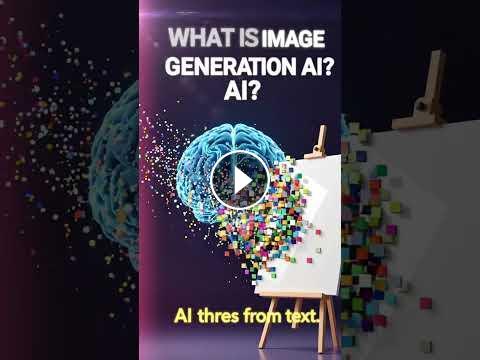
Image Generation AI is a type of artificial intelligence that can create images from text prompts, reference images, or other forms of input. These systems use machine learning models trained on large amounts of visual and textual data to generate new images based on the instructions they receive. In this video, we explain what Image Generation AI is, how it works, common technologies, applications, benefits, limitations, and important considerations when using AI-generated images.
An image generation system usually receives an input called a prompt. A prompt can describe a subject, scene, style, composition, lighting, or other visual details. The AI model processes the instructions and generates an image that attempts to match the requested description.
Modern image-generation systems can create many types of visual content. They can generate illustrations, realistic-looking scenes, concept art, designs, diagrams, backgrounds, characters, product concepts, and other images depending on the model and its capabilities.
Many image-generation models use generative machine learning techniques. Diffusion models are one important approach. These models learn patterns from training data and can generate images by progressively creating or refining visual information according to the provided conditions.
Some image-generation systems can also work with existing images. Users may be able to edit an image, remove or replace elements, change the style, extend the image, or create variations. The available capabilities depend on the specific AI system.
Text-to-image generation is one of the most common forms of Image Generation AI. The user provides a written description, and the model converts the instructions into a visual output.
Image-to-image generation uses an existing image as an input or reference. The system can use the image together with instructions to produce a modified or transformed result.
Image Generation AI can be useful for creative work. Designers, artists, marketers, educators, content creators, game developers, and businesses can use AI-generated images for brainstorming, concept development, presentations, educational materials, and other projects.
AI-generated images can also help with rapid prototyping. Instead of creating every visual from the beginning, users can generate several concepts and refine the ideas they find useful.
However, Image Generation AI has limitations. Generated images may contain visual errors, incorrect details, unusual object shapes, or inaccurate text. Results can vary depending on the prompt, model, reference image, and generation settings.
AI-generated images can also raise questions about copyright, ownership, consent, attribution, and the use of training data. The legal and ethical considerations can differ depending on the situation and jurisdiction.
Another consideration is authenticity. AI-generated images can look realistic enough to be mistaken for photographs or real events. Users should consider labeling or disclosing synthetic content when appropriate, especially when the audience could reasonably misunderstand its origin.
Image Generation AI is related to Generative AI more broadly. Generative AI can create different types of content, including text, images, audio, video, and code. Image Generation AI specifically focuses on creating or modifying visual content.
Image-generation models can also be integrated into larger AI applications. An application may combine image generation with text generation, editing tools, search, databases, or other software to create a complete creative workflow.
The quality of an AI-generated image depends on several factors, including the model's training, prompt quality, image resolution, available computing resources, and the specific generation method.
In this video, you will learn what Image Generation AI is, text-to-image generation, image-to-image generation, diffusion models, Generative AI, AI image tools, prompts, image editing, applications, benefits, limitations, copyright, authenticity, and responsible use of AI-generated images.
This explanation is designed for students, beginners, designers, artists, content creators, developers, AI learners, and anyone interested in understanding how artificial intelligence can create and transform images.
An image generation system usually receives an input called a prompt. A prompt can describe a subject, scene, style, composition, lighting, or other visual details. The AI model processes the instructions and generates an image that attempts to match the requested description.
Modern image-generation systems can create many types of visual content. They can generate illustrations, realistic-looking scenes, concept art, designs, diagrams, backgrounds, characters, product concepts, and other images depending on the model and its capabilities.
Many image-generation models use generative machine learning techniques. Diffusion models are one important approach. These models learn patterns from training data and can generate images by progressively creating or refining visual information according to the provided conditions.
Some image-generation systems can also work with existing images. Users may be able to edit an image, remove or replace elements, change the style, extend the image, or create variations. The available capabilities depend on the specific AI system.
Text-to-image generation is one of the most common forms of Image Generation AI. The user provides a written description, and the model converts the instructions into a visual output.
Image-to-image generation uses an existing image as an input or reference. The system can use the image together with instructions to produce a modified or transformed result.
Image Generation AI can be useful for creative work. Designers, artists, marketers, educators, content creators, game developers, and businesses can use AI-generated images for brainstorming, concept development, presentations, educational materials, and other projects.
AI-generated images can also help with rapid prototyping. Instead of creating every visual from the beginning, users can generate several concepts and refine the ideas they find useful.
However, Image Generation AI has limitations. Generated images may contain visual errors, incorrect details, unusual object shapes, or inaccurate text. Results can vary depending on the prompt, model, reference image, and generation settings.
AI-generated images can also raise questions about copyright, ownership, consent, attribution, and the use of training data. The legal and ethical considerations can differ depending on the situation and jurisdiction.
Another consideration is authenticity. AI-generated images can look realistic enough to be mistaken for photographs or real events. Users should consider labeling or disclosing synthetic content when appropriate, especially when the audience could reasonably misunderstand its origin.
Image Generation AI is related to Generative AI more broadly. Generative AI can create different types of content, including text, images, audio, video, and code. Image Generation AI specifically focuses on creating or modifying visual content.
Image-generation models can also be integrated into larger AI applications. An application may combine image generation with text generation, editing tools, search, databases, or other software to create a complete creative workflow.
The quality of an AI-generated image depends on several factors, including the model's training, prompt quality, image resolution, available computing resources, and the specific generation method.
In this video, you will learn what Image Generation AI is, text-to-image generation, image-to-image generation, diffusion models, Generative AI, AI image tools, prompts, image editing, applications, benefits, limitations, copyright, authenticity, and responsible use of AI-generated images.
This explanation is designed for students, beginners, designers, artists, content creators, developers, AI learners, and anyone interested in understanding how artificial intelligence can create and transform images.
- Категория
- AI инструменты

Комментариев нет.
Следующее
Auto
-
00:53

Artificial Intelligence Foundations Course Learn AI Tools for practical generative AI implementation
-
1:43:48
Artificial Intelligence for Real Estate Agents: Free Training Replay (South Africa)
-
08:27
4 FREE AI Tools For Unlimited Video and Image Generation (Open Source+ No Credits) No Restriction
-
07:34
How To Use AI | Artificial Intelligence (AI) Explained
-
00:22
Small Business Ideas | Small Business Ideas in 2026 | Small businees Ideas Malayalam
-
04:18
This AI Creates Stunning Videos _ Images in Seconds (YouArt Review)
-
09:37
100% FREE LONG AI video Generator : NEW Text And Image To Video Maker
-
06:19
05 FREE And UNLIMITED AI Video Generator | Text To Video And Image To Video Maker
-
05:58
Free AI Video Generator | Text To Video And Image To Video | Video Enhance
-
55:28
Master AI Tools for Content Creation | ChatGPT, Image & Video Generation, Canva AI + MCP
-
00:21
Сайты для заработка | Заработок в интернете 2023
-
10:03
![Пассивный доход в 2024 с минимальным риском [Инструкция для новичков]](https://www.zarabotokonlinenovichkam.ru//uploads/thumbs/62170f5a8-1.jpg)
Пассивный доход в 2024 с минимальным риском [Инструкция для новичков]
-
06:33
Где найти подработку ЗА ОДИН ВЕЧЕР? Работа онлайн в 2024
-
00:54
Как новичку начать зарабатывать на трейдинге в 2024 году?
-
11:05
Как ЗАРАБОТАТЬ ШКОЛЬНИКУ в ИНТЕРНЕТЕ ? Самые Лёгкие Способы заработка денег в интернете 2024 !
-
13:39
Как зарабатывать с ТЕЛЕФОНА в 2024 году? Лучший, проверенный способ
-
34:57
Лучший интернет-бизнес для старта в 2024. (Для новичков)
-
01:00
Как майнить криптовалюту с телефона?Мобильный майнинг! 3$ за регистрацию!Заработок в интернете !
-
12:28
ФРИЛАНС с НУЛЯ в 2024 году| РЕАЛЬНО ли ЗАРАБОТАТЬ?
-
05:59
Как заработать на Pinterest? Бесплатный Трафик о котором никто не говорит.
 Загрузка...